June Social Campaigns How AI Platforms Enable Rapid Content Iteration
The Challenge of Maintaining Fresh Social Content at Scale
Why traditional content calendars fall short for competitive markets
Your marketing team built a content calendar in January. It looked solid on a spreadsheet. You mapped out themes, asset types, posting times, and campaign angles across all twelve months. Then June arrived.
By mid-month, you realized that what you planned three months ago no longer resonates with your audience. A competitor just launched a campaign that’s getting serious traction. Your industry had a major news cycle you didn’t anticipate.
Customer feedback from May revealed new pain points worth addressing. And your CEO just asked why you’re not talking more about a partnership announcement from last week.
This is the reality of static content planning in fast-moving industries. Traditional calendars assume you can predict what matters in June while sitting in March. They work fine for evergreen content and seasonal campaigns with long lead times, but they crumble against real-world market dynamics. Your calendar becomes a relic within weeks.
Teams operating in competitive markets know this problem intimately. Whether you’re in Denver, Los Angeles, Austin, or anywhere else competing for attention, rigid planning creates friction. You end up choosing between two bad options: stick to an outdated plan or abandon the calendar entirely and scramble reactively. Neither approach scales. And when your ai seo platform is supposed to help you move faster, a clunky content calendar just slows you down further.
The cost of manual iteration and delayed campaign adjustments
Let’s talk about what happens when your team tries to iterate on live campaigns without proper automation and processes in place.
A team member spots an underperforming post on Tuesday morning. The engagement rate is half of what similar content typically gets. Your first instinct is to create a variant (different copy, new CTA, different image).
But here’s where manual workflows kill your momentum. Someone needs to brief the designer. The designer needs 2-3 hours to turn around a new visual.
Copy gets reviewed. Social manager approves. Finally, you publish Wednesday afternoon.
By then, the algorithm has moved on. Peak engagement window closed. Opportunity lost.
This delay multiplies across campaigns. Multiply it by the number of team members involved. Add approval cycles. Add communication gaps between departments. What should take 30 minutes of actual work stretches into 1-2 days of calendar time.
The cost compounds further when you consider what isn’t happening while your team is juggling manual handoffs. Your content strategist isn’t analyzing performance trends. Your copywriter isn’t exploring new angles for next week’s push.
Your team isn’t building institutional knowledge about what actually works in your market. They’re trapped in coordination overhead instead of doing creative, strategic work.
Organizations using outdated manual processes report losing 15-20 hours weekly just managing approvals and asset handoffs. That’s not hyperbole. When you multiply that by campaign frequency and team size, you’re looking at significant lost productivity. And when competitors can iterate in hours instead of days, every delayed adjustment compounds your disadvantage.
How AI-driven platforms reduce time-to-publish for social assets
An ai seo tool designed for content creation changes this equation fundamentally. Here’s how.
Real-time monitoring surfaces performance data and opportunities instantly. Your team sees which posts are underperforming before the engagement curve flatlines. Rather than waiting for a weekly review meeting, they act within hours.
AI-powered content generation means variant creation no longer bottlenecks on designer availability. Your team can brief the platform once, and it produces multiple headline variations, copy angles, and visual concepts simultaneously.
Approval workflows become instantaneous instead of asynchronous email chains. Compliance and brand guidelines are built into the system itself, not dependent on human memory. When your content workflows scale, every step moves at machine speed, not human-coordination speed.
The impact is measurable. Teams working with modern ai seo agent platforms report publishing optimized campaign variations within 1-2 hours instead of 1-2 days. That speed difference isn’t incremental. It’s the difference between capitalizing on trending moments and missing them entirely. It’s the difference between testing three creative angles per week and testing twelve. It’s the difference between reacting to market shifts and driving them.
In June and beyond, your content calendar doesn’t disappear. It evolves. It becomes a living document updated by real-time performance signals and team insights, not a static artifact created months earlier. That’s how rapid iteration actually works at scale.
Word count: 742 words
Leveraging AI to Speed Up Campaign Testing and Optimization
Automated A/B testing frameworks for social copy and creative variations
The traditional approach to social testing moves at a crawl. You create two versions of a post, publish them, wait a week, analyze results, then implement learnings. By then, your audience has moved on to different platforms, different trends, different priorities.
An ai seo platform fundamentally changes this timeline. Automated A/B testing frameworks let you spin up dozens of variations simultaneously, each testing different hooks, calls-to-action, emotional angles, and messaging tones. Instead of choosing between “Click here” and “Learn more,” you’re running 15 variations across your audience segments at once.
Here’s what matters: these frameworks don’t just randomize text. They’re built on your historical performance data. If your audience in Denver, CO has consistently engaged with benefit-driven copy over curiosity-driven hooks, the AI learns that pattern and weights your test variations accordingly. The same applies for Los Angeles, CA audiences who might respond better to lifestyle-focused messaging.
The real power emerges when you’re managing multiple platforms. LinkedIn copy needs a different rhythm than Twitter. Instagram captions shouldn’t read like TikTok. An automated testing framework handles these contextual differences across your entire social footprint, running platform-specific variations in parallel. What works on one channel informs optimization on another.
Teams in San Diego, CA and Austin, TX using these systems report reducing testing cycles from weeks to hours. You’re not waiting for statistical significance anymore because you’re testing at volume. The winning variations bubble up fast, and underperformers get replaced before they waste budget or team attention.
Real-time performance monitoring and intelligent pivoting
Static dashboards are dead weight. Real-time monitoring means your content performance data updates as engagement happens, not as a daily report. When a post starts underperforming within the first 30 minutes, your system can surface that immediately rather than waiting until it’s already lost momentum.
Intelligent pivoting takes this further. Instead of humans manually noticing a dip and deciding what to do next, the system automatically flags content that’s trending below your benchmarks and surfaces alternative approaches in real time. This is where content velocity matters, because you’re not just creating more content, you’re creating smarter responses to what your audience actually wants in the moment.
Consider a June campaign targeting New York, NY audiences. You launch a post at 9 AM. By 10 AM, engagement metrics are clear. If it’s tracking 40% below your usual interaction rate, the system suggests three alternative angles based on what similar audiences responded to in past campaigns. Your team can approve, adjust, or relaunch within minutes, not days.
This real-time intelligence means your campaigns stay relevant. Social platforms reward recency and engagement velocity. An AI-powered monitoring system keeps your hand on the pulse, catching opportunities to double down on winning content and pivoting away from underperformers before they drain resources.
Teams managing campaigns across Washington, DC and Newport Beach, CA appreciate the consistency this provides. Rather than some team members catching signals while others miss them, everyone sees the same real-time data and the system recommends the same optimizations across geographies.
Using machine learning to predict which variations will resonate with your audience
Prediction beats testing in speed and efficiency. Instead of running 20 variations to find the winner, machine learning models trained on your historical performance data can predict which variations are most likely to resonate before you publish.
This is pattern recognition at scale. The model learns what messaging resonates with audiences in Boulder, CO versus Costa Mesa, CA. It understands which visual styles drive engagement for your brand. It recognizes seasonal preferences, trending topics that shift engagement patterns, and even how different audience segments respond to urgency versus patience in your copy.
The predictions aren’t perfect, but they’re directional and they’re fast. Instead of choosing between variations based on gut feel, you’re choosing based on what the data suggests will perform. Using insights from ai patterns, teams can validate which approaches align with their broader content strategy before hitting publish.
What makes this practical: these predictions get stronger over time. The first month of data gives you maybe 70% accuracy. After three months, you’re approaching 85-90%. The system learns your audience faster than any human can, which means your June campaigns perform better than your May campaigns using the same tools.
Brands running this approach report 40-50% faster time-to-optimal-performance compared to traditional testing. You’re not eliminating testing, you’re eliminating the guesswork that precedes it. The AI shortlists the most promising variations, your team validates and approves, and you publish with confidence that you’re not shooting in the dark.
Content Generation and Personalization in Minutes, Not Days
How generative AI enables rapid multi-variant content creation
The old way of creating social content meant sitting down, writing one post, waiting for feedback, revising, and hoping it performed well. That cycle took hours or even days. Now? An ai seo platform can generate dozens of variations in minutes, testing different angles, tones, and messaging strategies simultaneously.
Here’s what that actually looks like in practice. You feed your AI SEO tool a core message about a product launch, and it outputs multiple versions: one emphasizing urgency, another focusing on value, a third highlighting customer testimonials. Each variant targets a different psychological trigger.
Your team no longer needs to brainstorm endlessly. Instead, you validate which angles resonate fastest and then double down on winners.
The speed matters because June social campaigns live or die by momentum. When competitors are posting daily, you can’t afford to spend three hours perfecting a single caption. An AI content platform generates 10-15 high-quality variations in the time it used to take to write one. Your approval workflows become shorter. Your iteration cycles compress from days to hours.
Multi-variant creation also means testing messaging before committing budget to paid amplification. You publish three organic versions, measure engagement for two hours, and boost the strongest performer. That’s strategic efficiency. You’re not gambling on creative hunches anymore. You’re letting real audience data guide your spend.
Scaling personalized messaging across different audience segments
One message doesn’t work for everyone. A prospect in San Diego might care about local partnerships. Someone in Denver might prioritize speed and implementation timelines. A New York-based decision maker might focus on enterprise-level security and compliance.
Manual segmentation and personalization across these groups used to require separate teams or at minimum extensive copywriting work. An AI SEO agent compresses that workload dramatically. You define your audience segments, feed in their pain points and priorities, and the platform generates tailored messaging for each group simultaneously.
Consider this scenario: You’re running a June campaign targeting mid-market companies across multiple regions. Using traditional content workflows, you’d write base copy, then manually adjust it for different personas and geographies. That’s repetitive, error-prone, and slow. With an ai content personalization, the system automatically adjusts language, references, and value props for each segment. Your Los Angeles audience sees messaging tuned to their market dynamics. Your Austin segment gets copy reflecting their specific needs.
The real power emerges when you combine segment personalization with performance tracking. You’re not just creating more messages faster. You’re gathering data on which messages work best for which audiences. That intelligence feeds back into future campaigns, making each iteration smarter than the last.
Scaling personalization also reduces the coordination headaches that plague distributed teams. Marketing members in different regions can pull pre-generated, audience-specific content without waiting for centralized approval or rewrites. Your workflow becomes asynchronous and efficient.
Maintaining brand voice consistency while accelerating output
Speed kills consistency if you’re not careful. When you’re generating dozens of pieces daily, it’s easy for brand voice to drift. One post sounds corporate. The next feels casual. Audience members notice these inconsistencies, and trust erodes.
That’s where your AI SEO tool’s brand voice training becomes critical. Modern platforms let you upload your existing content, communication guidelines, and brand documentation. The system learns your voice patterns, tone preferences, and messaging frameworks. Then every generated piece reflects your brand’s authentic personality, even when output scales 10x.
Think of it this way: you’re not replacing your brand voice with automation. You’re encoding it into your workflows. Your content teams define the voice standards upfront through clear documentation and examples.
The AI learns those standards and applies them consistently across all generated content. This approach means your June campaigns maintain the same authentic voice whether one person or five people are creating content.
Consistency also improves when you use content repurposing automation as part of your workflow. A single well-crafted piece can be adapted across platforms and formats while preserving voice. One blog insight becomes a tweet, a LinkedIn post, an Instagram carousel, and a newsletter snippet, all maintaining consistent messaging and tone.
The key is establishing documented brand guidelines before you accelerate content generation. Without those guardrails, AI becomes a liability. With them, it becomes a consistency engine that scales without compromise.
Integrating SEO Insights Into Social Campaign Development
Extracting keyword themes and search intent for social messaging
Here’s where the real magic happens. Your organic SEO data contains goldmines of keyword insight that directly inform what your audience actually wants to see on social platforms. Instead of guessing what messaging resonates, you’re working from real search behavior and proven query patterns.
When you pull keyword themes from your SEO performance data, you’re identifying the language your audience naturally uses. Maybe your content ranks well for “AI workflow automation tools” and “content creation at scale” across search results. Those exact phrases become your messaging hooks for June campaigns. Your social content then speaks in that same vocabulary, which means better alignment between discovery and engagement.
Understanding search intent matters just as much as the keywords themselves. Are people searching for educational content (intent: learn), product comparisons (intent: evaluate), or immediate solutions (intent: buy)? That intent shapes your social angle entirely.
A campaign targeting “how to build content workflows” leans educational and positions your ai seo agent as a knowledge resource. Meanwhile, a campaign targeting “content automation platform comparison” goes straight into feature-focused messaging and case studies.
The efficiency gains are real. Teams in Denver, Los Angeles, and San Diego can stop debating what messaging works and instead reference actual keyword performance data. You’re not iterating blindly. You’re iterating strategically, grounded in search behavior that’s already proven your audience cares about specific topics and angles.
Aligning social content strategy with organic search opportunities
Your organic search strategy and your social strategy shouldn’t exist in separate universes. When they’re aligned, your entire content machine becomes exponentially more powerful. An ai agent helps you spot these alignment opportunities automatically, surfacing topics where organic potential exists and social amplification can accelerate results.
Consider this scenario: your SEO data shows strong keyword gaps in “content approval workflows for teams.” There’s search volume, low competition, and obvious audience need, but you haven’t built that pillar content yet. Instead of waiting for your organic strategy to catch up, you start building awareness on social now. June campaigns can tease the topic, gather feedback, and build audience anticipation before the cornerstone piece launches. Your social content becomes the research phase for your organic strategy.
This cross-channel approach also surfaces quick wins. If your social audience is already asking questions about “scaling content creation without losing brand voice,” you’ve found an organic topic that should rank. That conversation thread becomes your next blog outline. The feedback loop between social conversations and search keywords keeps both channels feeding each other constantly.
Teams working across service areas from Austin to Washington, DC can coordinate messaging that’s consistent but localized. Your autonomous seo agent identifies regional keyword variations and trending questions, which social teams then incorporate into campaign variations without starting from scratch.
Using platform-level data to inform both paid and organic social tactics
Platform analytics give you signals beyond engagement metrics. LinkedIn shares reveal what professional audiences care about. Twitter/X conversations surface real-time pain points. Instagram save rates tell you what’s genuinely useful. These signals, combined with your SEO data, create a complete picture of what actually matters to your audience.
If your LinkedIn content about “content creation workflows” consistently gets saved and shared, you’ve validated that topic’s importance. Your organic strategy should double down on ranking for those keywords. Your paid social budgets should follow the engagement. Your ai seo content automatically connects these dots, recommending which topics deserve amplification based on platform performance data.
Platform-specific data also prevents wasted spend. You can identify which content angles actually drive conversation versus vanity metrics. Maybe videos about “AI content workflows” generate more meaningful engagement on platforms than carousel posts about the same topic. That insight directly shapes your June campaign production plan and budget allocation.
The tactical advantage becomes obvious quickly. Instead of running the same campaign across every platform, you’re tailoring based on what the data tells you works where. Resources go to proven performers. Testing budgets focus on underperforming angles. Content generation becomes more efficient because you’re generating variations of winning angles instead of throwing everything at the wall.
This integrated approach turns social campaigns from broadcast activities into strategic research tools that simultaneously build brand visibility, generate qualified feedback, and validate your organic content roadmap.
Workflow Automation From Brief to Launch
Streamlining approval processes with AI-assisted quality checks
Here’s where things get real. You’ve got creative work flowing in, but nobody wants a brand disaster because someone skipped the review process. Traditional approval workflows kill momentum fast. Marketing teams wait days for sign-offs while stakeholders juggle competing priorities, and by the time content gets blessed, the moment’s already passed.
An ai seo platform changes this dynamic entirely. Rather than treating approval as a bottleneck, AI-assisted quality checks happen continuously throughout creation. The system flags brand voice inconsistencies, checks compliance requirements, validates messaging alignment, and surfaces potential issues before human eyes even touch the work. Your team members spend approval time making strategic decisions instead of hunting for typos or inconsistent formatting.
Think about what this means operationally. A campaign launching in June across Denver, Austin, and San Diego doesn’t need three separate review rounds. The platform catches tone drift, confirms hashtag strategy aligns with your documented standards, and verifies that product claims match approved messaging. When approval actually happens, reviewers spend minutes confirming strategy rather than hours correcting execution errors.
The real win? Approval becomes a confidence gate, not a correction phase. Your brand voice stays consistent because the system maintains it automatically. Requirements documentation becomes actionable filters rather than aspirational guidelines.
Automating asset adaptation across multiple platform formats
A single concept needs to live on Instagram, LinkedIn, TikTok, Twitter, and Pinterest. Each platform has different dimensions, character limits, visual requirements, and audience expectations. Creating five versions manually means five times the work, five times the chances for inconsistency, and five times the opportunity for things to break.
Automation handles this elegantly. Feed your core message into the system and it generates platform-specific variations automatically. Instagram carousel posts become LinkedIn article teasers become punchy Twitter threads become vertical video briefs. The underlying strategic content stays intact while format adapts to platform requirements.
What makes this powerful for your campaigns is speed without sacrifice. A product launch that traditionally required separate creative passes for each channel now happens simultaneously. Your team avoids the painful situation where social posts go live on different days because one platform lagged in the production queue. Everything coordinates.
Beyond just format adaptation, the system understands nuance. A B2B message about workflow optimization lands differently on LinkedIn than on TikTok, and the platform knows this. It adjusts tone, vocabulary, and call-to-action while preserving the core campaign narrative. When you’re launching across Los Angeles, Boulder, and Washington DC simultaneously, this consistency matters tremendously.
You’re also building institutional knowledge. Each adaptation gets documented so teams understand why certain approaches work on specific platforms. That becomes training material for future campaigns.
Building feedback loops that accelerate iteration cycles
Iteration used to mean wait-measure-adjust cycles that spanned weeks. Performance data would roll in, teams would analyze, strategize about changes, and then launch v2.0 sometime next month. By then, the moment had completely shifted.
Real-time feedback loops change everything. As content performs across social channels, the system captures what’s working and feeds those insights directly back into creation workflows. High-performing headlines become training signals. Engagement patterns inform which audience segments to target more heavily. Messaging approaches that resonate get amplified automatically.
This doesn’t mean letting algorithms run wild. Rather, using seo ai agent capabilities to surface insights fast enough that humans can act on them while campaigns are still live. Your teams see that a particular angle is resonating with audiences in the Southwest and can pivot resources there within hours, not weeks.
The approval and creative teams stay connected throughout the cycle. Instead of siloed reporting happening weeks later, feedback happens in real time. Copywriters see what messaging drives clicks. Designers understand which visual approaches engage their audience. Performance data becomes a continuous conversation, not an end-of-quarter review.
For organizations building content operations across multiple service areas and platform ecosystems, this matters tremendously. You’re not creating static campaigns that ship and hope. You’re building adaptive systems where learning compounds daily. Each iteration makes the next one faster and smarter.
Measuring Impact and Refining Strategy in Real Time
Setting up dashboards for cross-platform performance visibility
Here’s the reality: you can’t optimize what you can’t see. When you’re running social campaigns across Instagram, TikTok, LinkedIn, and Twitter simultaneously, fragmented data becomes your biggest enemy. An ai seo platform worth its salt integrates dashboards that pull performance metrics from every channel into a single, unified view.
These dashboards should track the fundamentals first. Engagement rates. Click-through rates.
Impression velocity. Share counts. Comments per post.
But they also need to surface the deeper signals: audience sentiment shifts, demographic composition changes, and traffic attribution back to your site. When your dashboard shows not just that a post performed well, but that it drove qualified traffic from a specific audience segment in Denver or Los Angeles, you’ve got actionable intelligence.
The best part? Real-time updates. June campaigns move fast. By the time you refresh your analytics manually, the momentum has already shifted. Automated dashboard refreshes mean your team sees performance data within minutes of posting, not hours later. That speed transforms dashboards from historical records into decision-making tools.
Identifying winning patterns to replicate at scale
Pattern recognition is where AI content iteration really shines. Your platform should surface recurring elements across your top-performing posts automatically. Maybe posts with video hooks and a question-based CTA drive 40% higher engagement.
Perhaps content framed around a specific pain point converts traffic at 3.2x the rate of generic posts. These patterns don’t jump out in spreadsheets, but they become obvious when your AI SEO tool analyzes hundreds of pieces of content across your campaign.
Document these patterns clearly. Create a living template library that captures what works: specific headline structures, visual compositions, posting windows, and messaging angles. When you find that carousel posts with exactly five slides and a consistent color palette outperform single-image posts, lock that in. Your team should be able to reference these patterns during the creation phase, not just after analysis.
Replicating at scale doesn’t mean copying the same post verbatim. It means understanding the structural elements that drive performance and applying them to new content. A post about overcoming compliance challenges that resonates with your Washington, DC audience can inform how you frame similar messaging for teams in San Diego or Austin. The pattern translates; the execution stays fresh.
Adjusting June campaigns mid-month based on early performance data
June campaigns have a built-in advantage: you’re halfway through before the month ends. That means you have time to pivot. Traditional content calendars lock you into predetermined schedules. But when you’re using ai content distribution, mid-month adjustments become standard practice, not exceptions.
Here’s how this works in practice. By June 15th, your dashboards reveal which campaign angles are resonating. Maybe your “automation for teams” angle is outperforming your “compliance management” angle by a significant margin.
Rather than pushing the original plan through to June 30th, you shift your content production pipeline. Your AI tools accelerate generation of high-performing variations while you pause or redirect underperforming threads. That’s not abandoning strategy; that’s sharpening it with real data.
Set clear decision rules before the month starts. Define thresholds: if a campaign element underperforms by 25% versus your benchmark, flag it for adjustment. If a new angle shows promise, you’ll allocate production resources to explore it further. These rules keep adjustments strategic rather than reactive, and they keep your team aligned on what triggers a change.
The final truth about measuring impact and refining strategy in real time is this: June campaigns aren’t just about pushing content out at scale. They’re about learning, fast. Every post teaches you something about what resonates with your audience, whether they’re in Boulder or New York.
When you build measurement and iteration into your core process, your campaigns compound in effectiveness. Early July campaigns benefit from June learnings. August campaigns are sharper still.
That’s how an ai seo agent empowers teams to move from guessing to knowing, from hoping for results to building a system that delivers them. The infrastructure matters. The metrics matter.
But the commitment to learning matters most. That’s what separates campaigns that fade with the month from campaigns that build momentum for months to come.
Our Blogs
Related Content
Explore our blog for expert insights, customer stories, and the latest updates on content, SEO, and publishing.
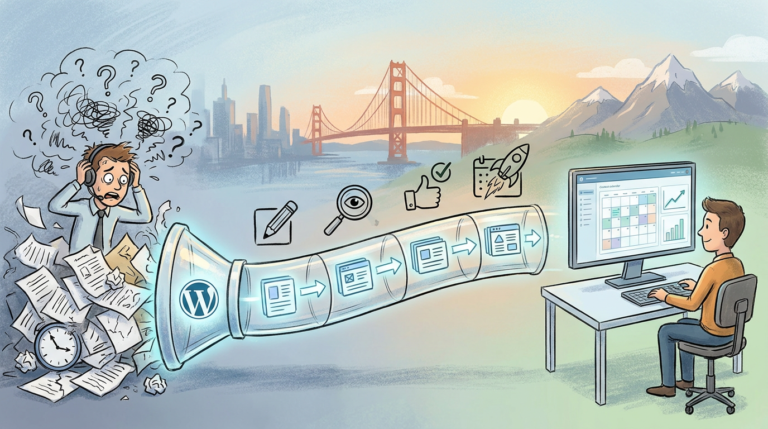
WordPress Publishing Workflows That Save Hours

Back to Work Productivity Why September is Ideal for Content System Changes

How Brand Voice Consistency Actually Works Across Automated Content Systems

Spring Campaign Planning With Automated Content Generation

AI Content Generation Workflows for April Product Launches

July Performance Metrics That Reveal Your AI Tool’s True Value