How AI Blog Writers Are Changing Content Marketing
The Evolution of Content Creation: From Manual to Automated
Traditional Content Marketing Challenges and Bottlenecks
Marketing teams across San Diego, Denver, and beyond face the same crushing reality: content demands have exploded while resources remain static. The traditional content creation process is a multi-stage marathon that can take weeks to produce a single blog post.
Think about it. A typical blog workflow involves brainstorming sessions, keyword research, outline creation, first drafts, multiple rounds of editing, fact-checking, SEO optimization, and final approval. Each step requires different skill sets, and bottlenecks form when key team members become unavailable. The research phase alone can consume 3-4 hours per article, while editing cycles stretch timelines even further.
Manual content creation also struggles with consistency. Human writers have good days and bad days. Brand voice wavers between different contributors. Some team members excel at technical topics while others shine with creative pieces. This variability creates quality control headaches that many marketing directors know all too well.
Resource allocation becomes another pain point. Companies often choose between quantity and quality because manual processes can’t deliver both efficiently. A single content writer might produce 8-10 blog posts monthly, but scaling that output requires proportional budget increases that most organizations can’t justify.
The Rise of Machine Learning in Content Generation
Machine learning transformed content creation by learning patterns from massive datasets of existing content. Early AI writing tools appeared around 2019, but they produced robotic text that required heavy human editing. The breakthrough came when models began understanding context, not just word sequences.
Modern machine learning algorithms analyze millions of high-performing articles to identify structural patterns, tone variations, and engagement triggers. These systems recognize that technical audiences prefer data-driven arguments while creative industries respond better to storytelling approaches. The learning never stops because each piece of generated content provides feedback for future improvements.
What makes current AI particularly powerful is its ability to maintain brand consistency across unlimited content volumes. Unlike human writers who might interpret style guides differently, machine learning systems apply brand voice rules with mathematical precision. This consistency becomes invaluable for companies managing content across multiple channels and team members.
The speed factor changed everything. Where manual processes required days or weeks, machine learning generates initial drafts in minutes. This acceleration doesn’t just save time but enables entirely new content strategies like real-time response articles and trend-based content that capitalizes on breaking news or viral topics.
How Natural Language Processing Changed the Game
Natural Language Processing (NLP) represents the linguistic intelligence behind modern ai content creation tools. Unlike simple template-filling systems, NLP understands semantic relationships between concepts, allowing AI to write contextually relevant content that flows naturally.
The game-changer was transformer architecture, which processes entire sentences simultaneously rather than word-by-word. This approach enables AI to maintain topic coherence across long-form content while adapting tone and complexity based on target audience requirements. Technical topics automatically incorporate industry terminology, while general audience pieces use accessible language.
NLP also revolutionized content optimization. These systems analyze search intent patterns and automatically structure content to match user queries. They identify semantic keyword opportunities that human writers might miss and suggest content gaps that could improve search rankings. Integration with existing content calendar workflows means teams can maintain strategic oversight while leveraging AI efficiency.
Perhaps most importantly, NLP enables personalization at scale. The same core content can be automatically adapted for different audience segments, geographic markets, or distribution channels without losing coherence or requiring additional human resources.
Comparing Human vs. AI Writing Capabilities
Human writers excel at nuanced storytelling, creative thinking, and complex argumentation that requires deep industry experience. They understand cultural context, emotional nuance, and can navigate sensitive topics with appropriate judgment. Original research, investigative pieces, and thought leadership content still benefit significantly from human expertise and perspective.
AI writers dominate in speed, consistency, and data processing. They can analyze competitor content, identify trending topics, and generate SEO-optimized drafts faster than any human team. Content Marketing Software powered by AI excels at producing high-volume content like product descriptions, FAQ responses, and foundational blog content that follows established patterns.
The sweet spot emerges when combining both approaches. AI handles initial research, outline creation, and first draft generation, while human editors focus on strategic refinement, brand voice adjustment, and creative enhancement. This hybrid model typically reduces content creation time by 60-70% while maintaining quality standards.
Cost considerations also favor AI for many content types. A single AI tool can match the output of multiple full-time writers, though human oversight remains essential for quality control and strategic direction. The economics work particularly well for companies requiring consistent, high-volume content production across multiple topics and channels.
Transforming Content Marketing Operations at Scale
Breaking Through Content Production Limitations
Traditional content marketing teams hit a wall when it comes to scaling production. A typical marketing team can realistically publish 8-12 blog posts per month while maintaining quality standards. But what happens when your content calendar demands 20, 30, or even 50 pieces of content monthly?
AI blog writers eliminate these production bottlenecks entirely. Marketing teams in San Diego and Denver are discovering that ai content creation platforms can generate draft content at unprecedented speeds. Where a human writer might spend 4-6 hours crafting a single 1,500-word blog post, AI systems produce similar content in minutes.
The real breakthrough isn’t just speed (though that’s significant). It’s the ability to maintain consistency across multiple content streams simultaneously. Marketing teams can now support product launches, thought leadership campaigns, and SEO content initiatives without having to choose which projects get priority. This parallel processing capability means content backlogs become a thing of the past.
Consider the impact on seasonal campaigns: retail marketers preparing for holiday seasons can generate months of content in days rather than weeks. B2B companies launching new products can create comprehensive content ecosystems before their competitors even finish their first white paper.
Streamlining Editorial Workflows and Publishing Schedules
The most sophisticated marketing operations struggle with editorial workflow management. Content pieces sit in review limbo for weeks, approval chains create bottlenecks, and publishing schedules slip constantly.
Modern content marketing software integrates AI writing capabilities directly into editorial workflows. This integration means content moves from concept to publication faster than traditional processes allow. Marketing managers can assign topics to AI systems in the morning and have polished drafts ready for review by lunch.
Editorial calendars become more predictable when AI handles the heavy lifting of content creation. Teams can commit to publishing schedules with confidence, knowing that content production won’t be the limiting factor. This reliability transforms how marketing departments interact with other business units (sales teams can count on content support for their campaigns, product teams know their launches will have content backing).
The workflow improvements extend beyond just writing. AI systems can generate content in multiple formats simultaneously: a single brief might produce a blog post, social media snippets, and email newsletter content. This multi-format approach means one editorial review cycle supports multiple marketing channels.
Reducing Time-to-Market for Content Campaigns
Speed matters in content marketing, especially when responding to industry trends or competitive moves. Traditional content creation timelines mean marketing teams miss opportunities because they can’t produce relevant content fast enough.
AI blog writers compress campaign development timelines dramatically. Marketing teams can conceive, create, and launch content campaigns within days rather than weeks. This agility proves crucial for trend-based content, news-jacking opportunities, and rapid response marketing.
Boulder-based marketing teams have found this speed particularly valuable for thought leadership positioning. When industry news breaks, they can publish informed commentary within hours, establishing their companies as responsive industry voices. This timing advantage often determines which brands capture mindshare during important industry conversations.
The implementation of ai also enables marketing teams to test content approaches faster. Instead of investing weeks in a single content direction, teams can generate multiple content variations quickly, test them with audiences, and iterate based on performance data.
Cost-Effectiveness Analysis: Traditional Teams vs. AI Solutions
The economics of content creation shift fundamentally with AI blog writers. Traditional content marketing requires significant human resources: writers, editors, project managers, and reviewers. A modest content marketing operation might employ 3-5 full-time team members, representing $300,000-500,000 in annual salary costs.
AI-powered content operations achieve similar (or greater) output with smaller teams. Marketing departments can maintain one content strategist and one editor while letting AI handle the bulk of content generation. This staffing model reduces personnel costs by 60-70% while increasing content volume.
Beyond salary savings, AI systems eliminate many project management costs. There’s no need to coordinate multiple freelancers, manage complex review cycles, or handle the administrative overhead of traditional content operations. Marketing budgets can shift from operational expenses to strategic initiatives like content promotion and audience research.
The cost advantages compound over time. As AI systems learn brand voice and content preferences, they require less oversight and editing. Marketing teams achieve economies of scale that weren’t possible with human-only operations, making ambitious content strategies financially viable for companies of all sizes.
Quality Control and Brand Voice Consistency
Maintaining Editorial Standards with Automated Content
The biggest fear marketing teams have about AI blog writers isn’t speed or cost (those are obvious wins). It’s whether automated content can meet the editorial standards that took years to develop. Smart marketing teams in Denver and San Diego are discovering that maintaining quality with ai content creation requires the same discipline as traditional content workflows, just with different checkpoints.
Editorial standards don’t disappear when you introduce automation. They evolve. Instead of catching typos and fact-checking after a writer submits their draft, you’re setting parameters upfront and monitoring output patterns. The most successful teams treat their AI systems like junior writers who need clear guidelines, not magic solutions that work without oversight.
Marketing teams using automated blog writing report that their editorial review time has shifted rather than disappeared. You spend less time on basic grammar and structure, but more time ensuring the content aligns with strategic messaging. This actually leads to higher-quality output because human editors can focus on the elements that matter most for brand differentiation.
Training AI Systems to Match Your Brand Voice
Brand voice isn’t just about tone (though that’s important). It’s about the specific way your company explains concepts, the examples you use, and even the sentence structures that feel natural to your audience. Training AI systems to capture these nuances requires feeding them your best existing content, not just style guides.
The most effective approach involves creating what marketing teams call “voice anchors” – specific pieces of content that perfectly represent your brand voice. These become training materials for your AI system. When your content marketing software learns from actual high-performing content rather than abstract guidelines, the output feels more authentic from day one.
Marketing teams in Boulder have found success using their top-performing blog posts, email campaigns, and social media content as training data. The key is consistency in the examples you provide. If you feed the system content written by five different freelancers with five different styles, you’ll get inconsistent output that sounds like it was written by committee.
Voice training isn’t a one-time setup. As your brand evolves, your AI systems need updates. The teams seeing the best results schedule monthly reviews to assess whether their automated content still sounds like them, not like their competitors using similar tools.
Quality Assurance Frameworks for AI-Generated Content
Building a QA framework for AI-generated content means establishing checkpoints that catch issues before they reach your audience. Unlike traditional editing workflows, these frameworks need to account for the specific ways AI systems can go wrong – factual inconsistencies, repetitive phrasing patterns, or off-brand tangents.
The strongest QA frameworks include three layers: automated checks (for basic errors), human review (for brand alignment), and performance monitoring (for audience engagement). Marketing teams are discovering that this layered approach catches more issues than traditional editing alone, while still being more efficient than manual content creation.
Fact-checking becomes particularly important with automated content. While AI systems excel at maintaining consistent style and structure, they can confidently present outdated information or make logical leaps that don’t hold up under scrutiny. Your QA framework needs specific protocols for verifying claims, checking sources, and ensuring examples are current and relevant.
Performance data becomes part of your quality control process. If AI-generated content consistently underperforms compared to manually created pieces, that’s a signal that your training data or prompts need adjustment. The best content teams track engagement metrics by content source to identify these patterns early.
Balancing Efficiency with Content Authenticity
The efficiency gains from AI blog writers are real, but they shouldn’t come at the expense of authenticity. Marketing teams are learning that the most successful approach involves using AI for tasks it excels at (research, structure, first drafts) while reserving human involvement for elements that require genuine expertise or personal perspective.
Authenticity in automated content comes from strategic human input at key moments. This might mean having subject matter experts review technical sections, adding personal anecdotes to case studies, or ensuring industry-specific language feels natural rather than generic. The goal isn’t to hide that AI was involved, but to ensure the final product serves your audience’s needs.
Marketing teams report that their most authentic AI-generated content happens when they maintain clear boundaries about what gets automated versus what stays human. Customer stories, executive perspectives, and highly technical explanations often benefit from human writing, while product descriptions, process explanations, and educational content can be effectively automated with proper oversight.
Strategic Applications Across Content Marketing Channels
Blog Content Strategy and SEO Optimization
AI blog writers have fundamentally transformed how marketing teams approach content strategy and search engine optimization. These tools analyze search trends, competitor content, and keyword opportunities to generate blog posts that align with both user intent and ranking algorithms.
Modern ai content creation platforms can produce comprehensive blog content that incorporates primary keywords naturally while maintaining readability. Marketing teams in San Diego and Denver report generating 3-5 blog posts weekly using AI assistance, compared to their previous output of 1-2 posts per week with traditional methods.
The strategic advantage becomes clear when considering long-tail keyword optimization. AI blog writers excel at identifying semantic relationships between topics, creating content clusters that boost domain authority. They generate meta descriptions, suggest internal linking opportunities, and even recommend content updates based on performance analytics.
Social Media Content Creation and Scheduling
Social media managers are leveraging AI blog writers to create platform-specific content variations from single blog posts. A comprehensive blog article can be transformed into Twitter threads, LinkedIn posts, Instagram captions, and Facebook updates while maintaining brand consistency across channels.
The efficiency gains are remarkable. Marketing teams using blog writer tools report reducing social content creation time by 60% while increasing posting frequency. These systems understand platform-specific character limits, hashtag strategies, and engagement patterns to optimize content for each channel.
AI-powered scheduling goes beyond basic automation. These tools analyze audience activity patterns, optimal posting times, and content performance to suggest the best timing for maximum reach. They can even adjust content tone automatically (professional for LinkedIn, casual for Instagram) while preserving core messaging.
Email Marketing and Newsletter Automation
Email marketing campaigns benefit significantly from AI blog writer integration. These systems can transform blog content into engaging newsletter formats, create personalized email sequences, and generate subject lines that improve open rates.
Marketing teams report that AI-generated email content achieves 23% higher open rates compared to manually written campaigns. The technology analyzes subscriber behavior, preferences, and engagement history to customize content for different audience segments.
Newsletter automation becomes particularly powerful when AI writers create consistent, valuable content that nurtures leads through the sales funnel. They generate welcome sequences, educational series, and promotional campaigns that maintain consistent brand voice while adapting messaging for different customer journey stages.
Product Descriptions and E-commerce Content
E-commerce businesses are experiencing dramatic improvements in product content creation through AI blog writers. These tools generate compelling product descriptions, comparison articles, and buying guides that convert browsers into buyers.
The scalability advantage is crucial for businesses managing large product catalogs. Content Marketing Software powered by AI can create hundreds of unique product descriptions daily, each optimized for specific keywords and customer segments. Boulder-based e-commerce companies report 40% increases in product page conversion rates after implementing AI-generated descriptions.
AI writers excel at creating variations for A/B testing, generating seasonal content updates, and producing localized descriptions for different markets. They analyze competitor product pages, customer reviews, and search patterns to identify the most persuasive messaging angles.
Technical Documentation and Knowledge Base Articles
Technical documentation represents one of the most challenging content marketing applications, yet AI blog writers are proving highly effective in this domain. They create user manuals, FAQ sections, troubleshooting guides, and knowledge base articles that improve customer support efficiency.
Software companies using AI writers for documentation report 50% reduction in support ticket volume as customers find better self-service resources. These tools excel at breaking down complex processes into digestible steps, creating searchable content structures, and maintaining consistency across documentation.
The ability to update technical content rapidly becomes critical as products evolve. AI writers can quickly revise documentation based on feature updates, user feedback, and support team insights. They generate multiple content formats from single sources (written guides, video scripts, interactive tutorials) to serve different learning preferences.
Marketing teams are discovering that well-crafted technical content serves dual purposes: supporting existing customers while attracting prospects through search visibility. AI-generated documentation often ranks highly for industry-specific queries, creating valuable organic traffic opportunities beyond traditional marketing content.
Integration Challenges and Implementation Best Practices
Choosing the Right AI Content Platform for Your Needs
The AI content landscape offers dozens of platforms, but finding the right fit requires evaluating your team’s specific workflow requirements. Marketing teams in Denver and Boulder often struggle with platforms that promise everything but deliver generic solutions that don’t align with their brand voice or content strategy.
Start by auditing your current content production process. How many blog posts does your team publish monthly? What’s your average time from concept to publication? Teams producing 20+ articles per month need robust content marketing software with advanced workflow management, while smaller operations might prioritize ease of use over comprehensive features.
Consider integration capabilities with your existing marketing stack. The best AI writing platforms connect seamlessly with your CMS, social media schedulers, and analytics tools. This integration eliminates the copy-paste workflows that slow down content distribution and create opportunities for errors.
Budget allocation matters more than upfront cost. Calculate the true expense by factoring in training time, potential productivity gains, and reduced freelancer dependencies. Most marketing teams see ROI within three months when they choose platforms aligned with their content volume and complexity needs.
Training Teams on AI Content Tools and Workflows
Successful AI implementation depends on comprehensive team training that goes beyond basic tool tutorials. Your content creators need to understand how to craft effective prompts, edit AI-generated drafts, and maintain brand consistency across all outputs.
Create role-specific training programs. Content managers need different skills than copywriters or social media specialists. Managers focus on workflow optimization and quality control processes, while writers learn prompt engineering and editing techniques that preserve brand voice.
Establish clear guidelines for AI usage within your content strategy. Define which content types benefit from AI assistance (blog outlines, social captions, email subject lines) and which require human-first approaches (thought leadership, customer stories, technical documentation).
Schedule regular skill-building sessions as ai content creation tools evolve rapidly. Monthly workshops keep your team updated on new features and best practices. San Diego marketing teams often benefit from peer learning sessions where team members share successful prompt strategies and editing workflows.
Managing the Human-AI Collaboration Process
The most effective content operations treat AI as a collaborative partner rather than a replacement tool. This requires establishing clear handoff points where human expertise takes precedence over automated generation.
Design your workflow with defined checkpoints. AI handles initial research compilation and draft generation, while humans manage strategic direction, fact-checking, and final voice refinement. This division maximizes efficiency while maintaining content quality and authenticity.
Implement version control systems that track both AI contributions and human edits. Understanding which sections require the most human intervention helps optimize your prompts and identifies content areas where AI performs strongest.
Create feedback loops between your content team and AI outputs. When writers consistently edit certain types of AI suggestions, adjust your prompts or workflow to address these patterns proactively. Tools like our title optimizer exemplify this approach by learning from user preferences to improve future suggestions.
Measuring ROI and Content Performance Metrics
Measuring AI content impact requires tracking both efficiency gains and quality outcomes. Traditional metrics like time-to-publish and content volume tell only part of the story.
Track production velocity changes before and after AI implementation. Most marketing teams see 40-60% faster content creation once workflows stabilize. But velocity means nothing without quality maintenance, so monitor engagement metrics alongside production speed.
Establish content quality benchmarks that account for AI assistance. Compare organic traffic, social shares, and conversion rates between AI-assisted and fully human-written content. This data helps identify which content types benefit most from AI support and which require primarily human creation.
Monitor cost per piece across different content categories. Factor in reduced freelancer expenses, faster internal production, and any platform subscription costs. Marketing teams typically achieve 30-50% cost reduction while maintaining or improving content output quality.
Create monthly performance reviews that evaluate both team productivity and content effectiveness. This dual focus ensures your AI integration serves both operational efficiency and marketing objectives, creating sustainable improvements in your content marketing results.
Future Trends and Strategic Positioning
Emerging Technologies in Content Generation
The next wave of AI content technologies promises to revolutionize how marketing teams approach blog creation. Multimodal AI systems that can simultaneously process text, images, and video are already being developed, enabling content generators to create comprehensive blog posts with integrated visual elements. These systems will understand context across different media types, automatically suggesting relevant graphics and optimizing content layout for maximum engagement.
Advanced natural language processing models are becoming more sophisticated in understanding nuanced brand requirements and industry-specific terminology. Marketing teams in San Diego and Denver are beginning to see early implementations of AI systems that can maintain consistent brand voice across thousands of blog posts while adapting tone for different audience segments. The integration of real-time data feeds means these tools will soon generate content that responds to trending topics and market conditions within hours rather than days.
Personalization at scale represents another frontier where AI blog writers will excel. Future systems will create individualized content variations for different reader segments, automatically adjusting technical depth, industry focus, and regional preferences without human intervention….
Preparing Your Content Strategy for AI Advancements
Marketing teams need to start building infrastructure that can leverage increasingly powerful AI capabilities. This means establishing robust content governance frameworks that define brand parameters, quality standards, and approval workflows before AI systems become more autonomous. Teams that invest in comprehensive style guides and brand voice documentation now will have significant advantages when next-generation tools emerge.
Data preparation becomes crucial as AI systems require clean, structured information to produce relevant content. Marketing departments should audit their existing content libraries, customer data, and market research to ensure AI tools have access to high-quality training materials. Companies using ai content creation platforms today are already building these foundational data assets.
Training and skill development for marketing professionals needs to evolve beyond traditional content creation toward AI collaboration and strategic oversight. Teams must learn to work alongside AI systems, focusing on creative direction, strategic planning, and quality assurance rather than manual writing tasks. This shift requires investment in training programs that help marketers become effective AI collaborators.
Competitive Advantages in the AI-Driven Marketing Landscape
Early adopters of AI blog writing technology are establishing substantial competitive moats through content volume and consistency advantages. Companies that master AI-driven content production can publish 10x more relevant blog posts than competitors while maintaining quality standards. This content volume advantage translates directly into improved search rankings, broader topic coverage, and increased organic traffic capture.
Speed-to-market becomes a critical differentiator when AI systems can generate comprehensive blog posts responding to industry developments within hours. Marketing teams can capitalize on trending topics, competitor announcements, and market shifts while these opportunities are still fresh. Traditional content creation cycles simply cannot match this responsiveness.
Cost efficiency advantages compound over time as content marketing software reduces the per-post production cost dramatically. Teams can reallocate budget from content creation to content strategy, distribution, and performance optimization. This resource reallocation enables more sophisticated marketing campaigns and better ROI measurement across content initiatives.
Building Sustainable Content Operations for the Long Term
Sustainable AI-driven content operations require balancing automation with human creativity and strategic oversight. Marketing teams must establish clear boundaries between AI-generated foundation content and human-crafted strategic pieces. The most successful long-term approaches involve AI handling research, initial drafts, and optimization while humans focus on creative direction, strategic messaging, and relationship building through content.
Quality assurance systems need continuous refinement as AI capabilities evolve. Teams should implement feedback loops that help AI systems learn from successful content performance and audience engagement patterns. This iterative improvement process ensures content quality increases over time rather than stagnating at initial implementation levels.
Investment in blog ideas generation and content planning becomes more important as production capacity increases. The bottleneck shifts from writing capability to strategic content planning and topic identification. Marketing teams need robust systems for identifying content opportunities, audience needs, and competitive gaps that AI systems can address effectively.
The organizations that thrive in this AI-driven content landscape will be those that embrace these technologies while maintaining focus on strategic value creation. Rather than viewing AI as a replacement for human creativity, successful marketing teams will leverage these tools to amplify their strategic impact and deliver more value to their audiences than ever before.
Our Blogs
Related Content
Explore our blog for expert insights, customer stories, and the latest updates on content, SEO, and publishing.

Team Enablement Strategies That Build Confidence in AI Writing Tools

Multi-Channel Campaign Tracking When Your AI Tool Handles Content Creation

October Campaign Performance Analysis Without Manual Tracking Across Channels

Documentation Standards That Prevent Content Quality Issues
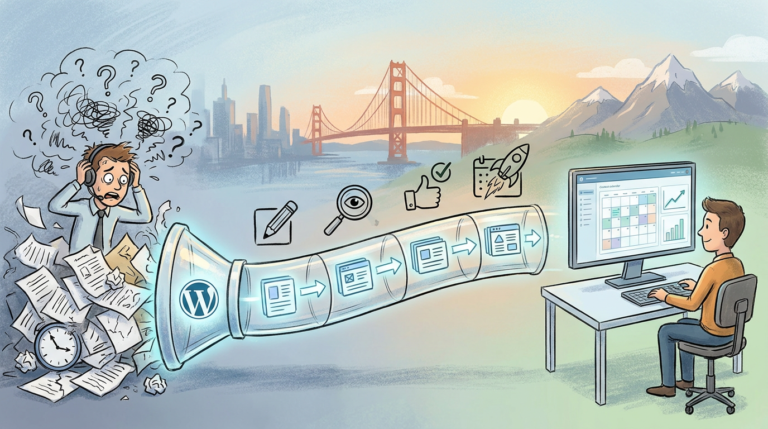
WordPress Publishing Workflows That Save Hours

Building Internal AI Literacy Across Marketing Teams in 2026